
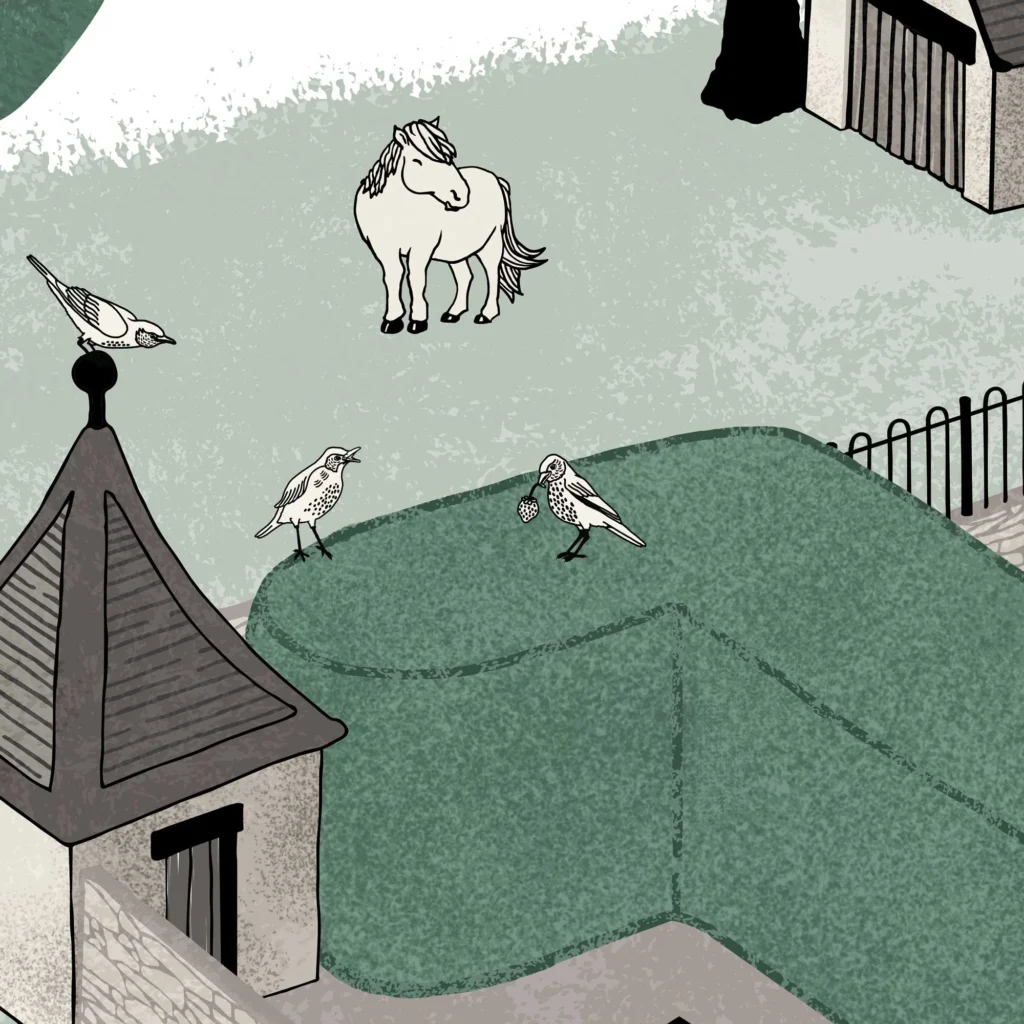
Commissioning illustration for a heritage project: what to think about
A few things that are useful to consider when commissioning illustration for a museum, historic place or heritage project, from the initial brief to the finished artwork.
Introduction
Commissioning illustration is often just one part of a much larger heritage project. You might be planning an exhibition, developing a visitor route or putting together a funding bid. Unless you commission illustration regularly, it isn’t always obvious what information an illustrator will need, how the process works or what will affect the cost.
There isn’t a single way to approach a commission. Every project has its own requirements, and some of the details only become clear as the work develops. But there are a few things that are useful to discuss early on. They can help establish what the illustration needs to do and how best to approach it.
What does the illustration need to do?
This is usually a good place to start. Is the illustration intended to help visitors find their way around a site, explain a historical process, introduce people from the past or promote an exhibition? It might need to do several of these things.
The intended audience matters too. A family trail, for example, might need a different approach from an exhibition aimed at people with a particular interest in history or architecture. And the format makes a difference. An illustration for a small leaflet has different requirements from one designed for a large interpretation panel or a website.
You don’t need to have all the answers before getting in touch. Even a broad idea of what you’re trying to achieve gives an illustrator something to work with. Part of their role is to help explore the possibilities.
Finding the right freelance illustrator
It’s natural to be drawn to a particular style, but it’s worth looking beyond the appearance of the work. Has the illustrator worked on projects with similar requirements? Have they created maps that need to be useful for visitors or illustrations that involve historical research and interpretation?
Looking at case studies can be particularly helpful. They often give a better sense of how an illustrator approaches a brief, works with a client and deals with the practical requirements of a project.
It’s also worth talking about research and accuracy. Who will provide the historical information? Is there a curator, historian or other specialist who can check the content? How will feedback and revisions be handled? These are all things that can be discussed before the work begins.
Scope, detail and budget
The number and complexity of the illustrations will affect the fee, but so will the amount of research involved, the intended use of the artwork and the time available. Design and layout may also be part of the commission, rather than illustration alone.
One thing that can be useful to discuss is the level of detail required. There isn’t always a need to illustrate everything in the greatest possible detail. A project with a limited budget might be better served by a smaller number of carefully considered illustrations than a large number of more elaborate ones.
The scope can often be adjusted to suit the resources available. Work might also be divided into phases, with the most important elements developed first and other parts added later.
It’s helpful to talk about budget early on, even if it’s only an approximate figure. It gives the illustrator a starting point for suggesting what might be achievable.
Where will the artwork be used?
An illustration might start life as part of an exhibition but later be needed for a website, leaflet or promotional material. A visitor map might also be adapted into a souvenir or used in other publications. These possibilities are worth discussing at the beginning because they can affect the licence and the fee. Commissioned illustration is usually licensed for agreed uses rather than sold outright. The illustrator retains copyright, while the client has permission to use the artwork in the ways set out in the agreement.
A licence can often be extended if new uses arise later. For example, an illustration originally commissioned for a window display at an Oxford arts centre was subsequently licensed for use on a sign and a leaflet. It is generally easier to consider likely uses at the outset, rather than discovering later that they weren’t included.
Research, feedback and approvals
Heritage projects often involve several people with different areas of expertise. The illustrator may be working with a project manager, curator, historian, interpretation specialist and designer, each of whom has a different perspective on the work.
It’s useful to establish who will provide information and who will check the historical content. The pencil-sketch stage is usually the best time for subject specialists to comment. Changes to clothing, objects, buildings or other details are much easier to make before the illustration is developed further.
It also helps to agree who will collect feedback and give final approval. Where several people are involved, having one person coordinate comments can make the process considerably more straightforward.
The timeline needs to allow for this. Alongside the illustration itself, there may be committee meetings, funder approvals, print deadlines or an exhibition opening date to work around.
Getting started
You don’t need a completely finished brief to start a conversation with an illustrator. It is just as useful to be clear about what is still undecided: perhaps the research is ongoing, the budget hasn’t been confirmed or you’re still working out how the illustrations will be used.
Those uncertainties are part of many heritage projects. Discussing them early gives you and the illustrator a chance to work out what is possible and where decisions need to be made.
If you’re planning a map in particular, you might also find my article on commissioning a freelance map illustrator useful. You can read more about how I work to see how I approach projects from the initial discussion through to the finished artwork.

Working on interpretation or a non-fiction book?
I illustrate interpretation panels, exhibitions, learning resources and non-fiction books, researched with the people who know the subject.