
Illustrating difficult histories without taking sides
What I learned from drawing for Uncomfortable Oxford about illustrating contested pasts: illustration can offer a different way of approaching difficult history. It can make complex subjects more accessible, bring different perspectives into view and encourage people to look beyond familiar accounts of the past.
Introduction
Museums, universities and heritage organisations are increasingly exploring uncomfortable aspects of their history: empire, slavery, repatriation and the commemoration of controversial historical figures. These subjects can be difficult to communicate, particularly when there are competing perspectives and no straightforward conclusions.
Text and historical evidence are essential, but illustration has something else to offer. It can make relationships visible, introduce a human dimension and give people another way into a subject. It doesn’t have to explain everything or tell people what to think. Sometimes it can simply make them curious enough to look more closely.
Making difficult history approachable
Difficult historical subjects don’t always need a sombre visual treatment. The tone of an illustration needs to reflect its purpose and audience as well as its subject. A museum exhibition about a traumatic event might call for a very different approach from a visitor map designed to accompany a walking tour.
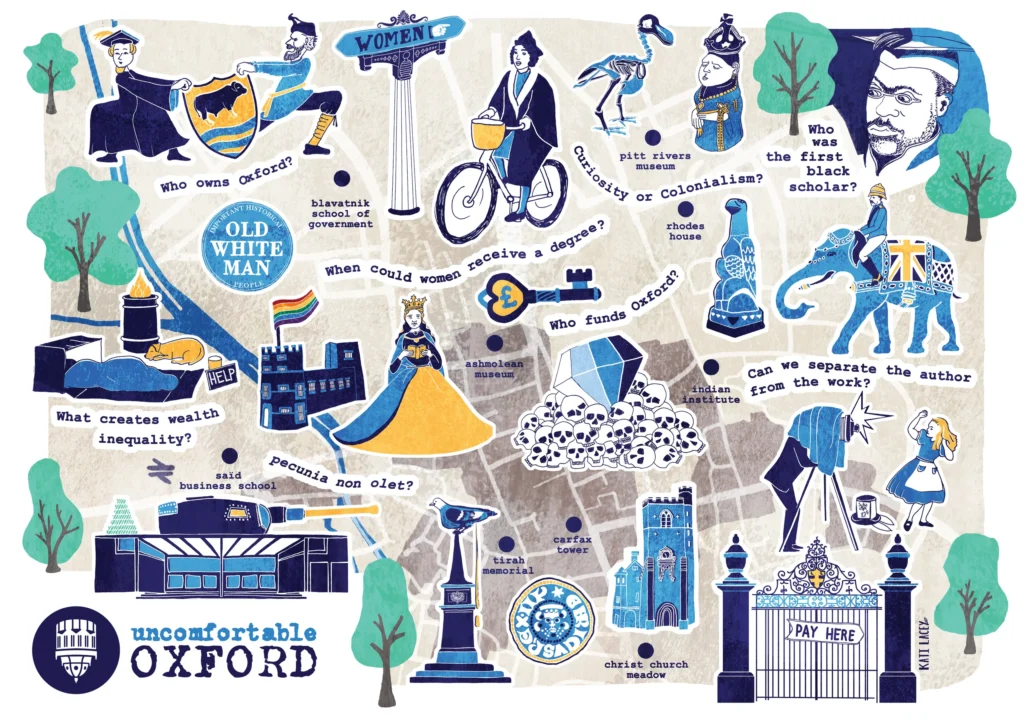
My work with Uncomfortable Oxford gave me an opportunity to think about this. The organisation runs walking tours exploring uncomfortable aspects of Oxford’s past, encouraging discussion between people with different views.
The illustrated map needed to work as a practical guide to the walk, but also as something people might want to take home and keep. It wasn’t intended to be a sombre document. The subject matter is serious, but the map is an invitation to have a level-headed conversation about some rather unsavoury events.
Showing different perspectives
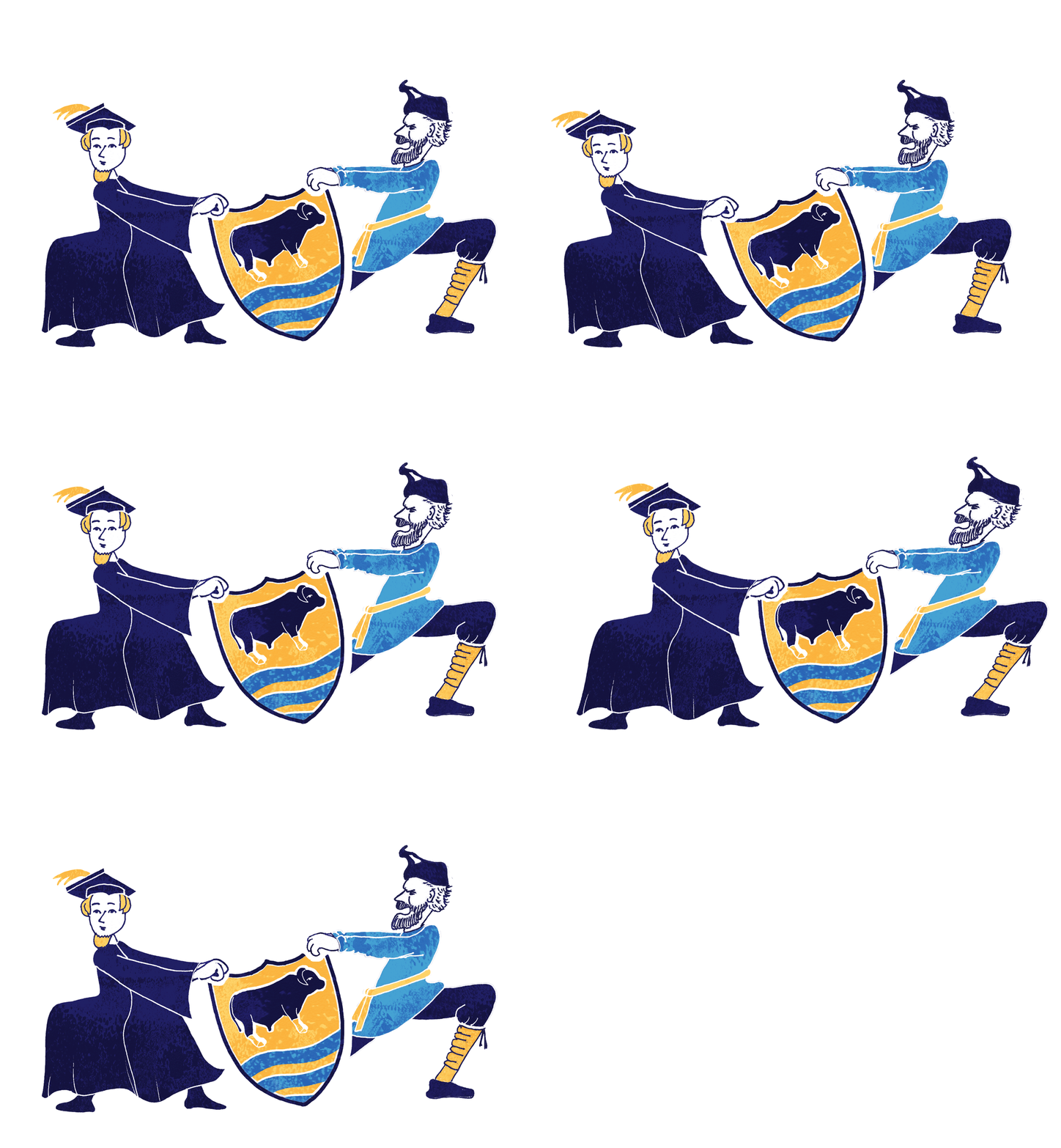
One of the illustrations on the Uncomfortable Oxford map shows a scholar and a townsperson squabbling. It was my way of expressing a question that runs through the subject: whose Oxford are we talking about? The university’s or the city’s? The relationship between town and gown has a long and complicated history. A drawing can give that relationship a visual form without needing to explain every part of it.
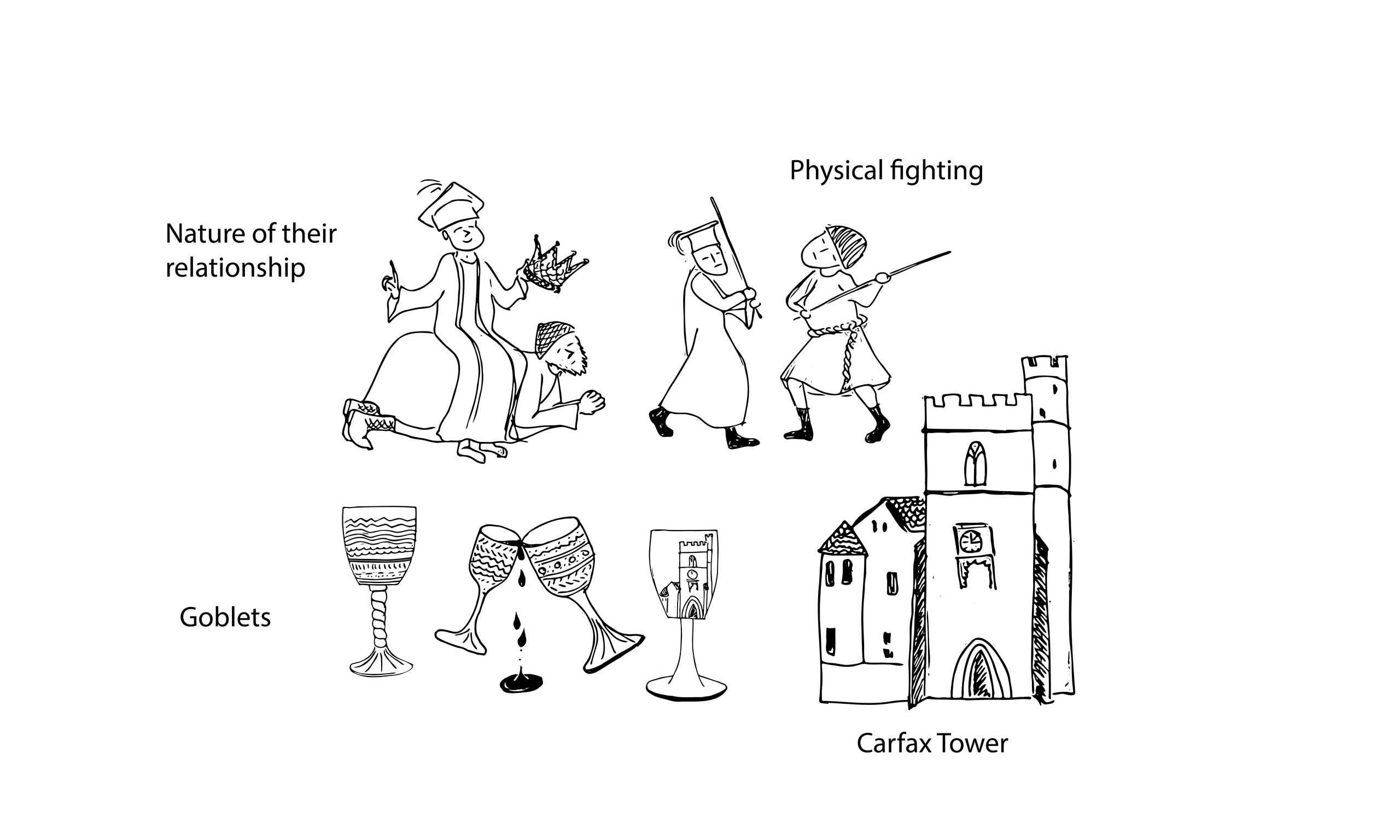
This is where illustration can be particularly useful. It can bring different people, viewpoints and parts of a story together in a single image. Rather than spelling out an argument, it can give the viewer something to consider.
Historical subjects are often complicated because there isn’t one simple version of events. The way we understand the past is influenced by the evidence available, the perspectives we bring to it and the questions we choose to ask. Illustration doesn’t have to resolve those differences. It can draw attention to them.
A map, for example, can highlight particular people, places or events without attempting to tell the whole story. It can encourage visitors to notice connections between what they see on the page and what they encounter during a walk or visit. Illustration can show accurate historical information while leaving room for different interpretations. It can raise questions rather than provide a definitive or reductive point of view.
Illustration as a way into history
For me, the interesting thing about illustrating difficult histories is the possibility of making subjects that might otherwise feel distant or uncomfortable easier to approach.
An illustration can introduce a human dimension, make a relationship visible or prompt a question. It can sit alongside historical evidence and written interpretation, offering a different way of looking at the same subject.
Illustration can be one way of opening up a conversation about difficult history. It offers a different perspective on the subject, without necessarily providing an answer.

Working on interpretation or a non-fiction book?
I illustrate interpretation panels, exhibitions, learning resources and non-fiction books, researched with the people who know the subject.